IP Types
This guide explains what IP types are and how Geonode provides them for different proxy use cases.
What Are IP Types?
IP types define how an IP address is sourced and used within proxy networks.
Geonode offers three main categories:
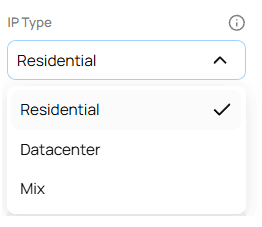
- Residential IPs – Real-user IPs assigned by Internet Service Providers (ISPs).
- Datacenter IPs – IPs generated by third-party data centers.
- Mixed IPs – A combination of Residential and Datacenter IPs for flexibility.
Each serves a unique purpose — from bypassing geo-restrictions to powering high-speed automation.
1. Residential IPs
What Are Residential IPs?
Residential IPs come from real user connections provided by ISPs.
Because they look like genuine home users, websites see them as legitimate traffic.
Best For
- Web scraping with minimal detection risk
- Accessing geo-restricted content
- Managing e-commerce or social media accounts
- Secure streaming and gaming
Pros
✔️ High trust level — less likely to be blocked
✔️ Works on strict, detection-sensitive sites
Cons
❌ Slower than datacenter IPs
❌ More expensive due to limited availability
2. Datacenter IPs
What Are Datacenter IPs?
Datacenter IPs are server-based IPs generated by hosting providers, not ISPs.
They offer higher speed and lower cost but are easier to detect.
Best For
- Bulk web scraping and data collection
- SEO monitoring and automation
- High-performance or bot-driven tasks
Pros
✔️ Fast and reliable
✔️ Cost-effective for large-scale operations
Cons
❌ Easier to detect and block on strict websites
❌ Limited success with region-locked or sensitive content
3. Mixed IPs
What Are Mixed IPs?
Mixed IPs combine both Residential and Datacenter sources — balancing realism and performance.
Best For
- Scalable web scraping and automation
- Testing and development environments
- Multi-purpose e-commerce or social media tasks
Pros
✔️ Balanced speed, security, and price
✔️ Greater flexibility across use cases
Cons
❌ Not as anonymous as pure Residential IPs
❌ Some tasks may require dedicated IP types
Comparison: Residential vs Datacenter vs Mixed
| Feature | Residential IPs | Datacenter IPs | Mixed IPs |
|---|---|---|---|
| Speed | Moderate | Fast | Balanced |
| Anonymity | High (real users) | Low (easily detected) | Moderate |
| Cost | Expensive | Affordable | Mid-range |
| Best For | Geo access, social media, streaming | Bulk scraping, SEO, automation | Versatile tasks needing both reliability & speed |
How to Choose the Right IP Type
- Residential IPs → for high anonymity and geo-specific access.
- Datacenter IPs → for fast, large-scale automation.
- Mixed IPs → for a balanced approach between performance and stealth.
Tips and Best Practices
- Start with Mixed IPs to test both speed and reliability.
- Use Residential IPs for sensitive or geo-restricted sites.
- Use Datacenter IPs for speed-critical automation or scraping.
- Always verify which type performs best for your target websites.
Summary
Each IP type serves a distinct purpose:
- Residential for trust and authenticity,
- Datacenter for speed and scale,
- Mixed for flexibility.
Choosing the right type ensures stable, efficient, and secure proxy performance for your specific needs.