Proxy Configuration
What is the Endpoint Generator
The Endpoint Generator helps you create customized proxy lists based on your preferences.
You can select IP type, host, location, protocol, and session type, then export endpoints in .txt format.
Step 1 — Access the Dashboard
- Log in to your Geonode dashboard.
- Scroll down to Proxy Configuration.
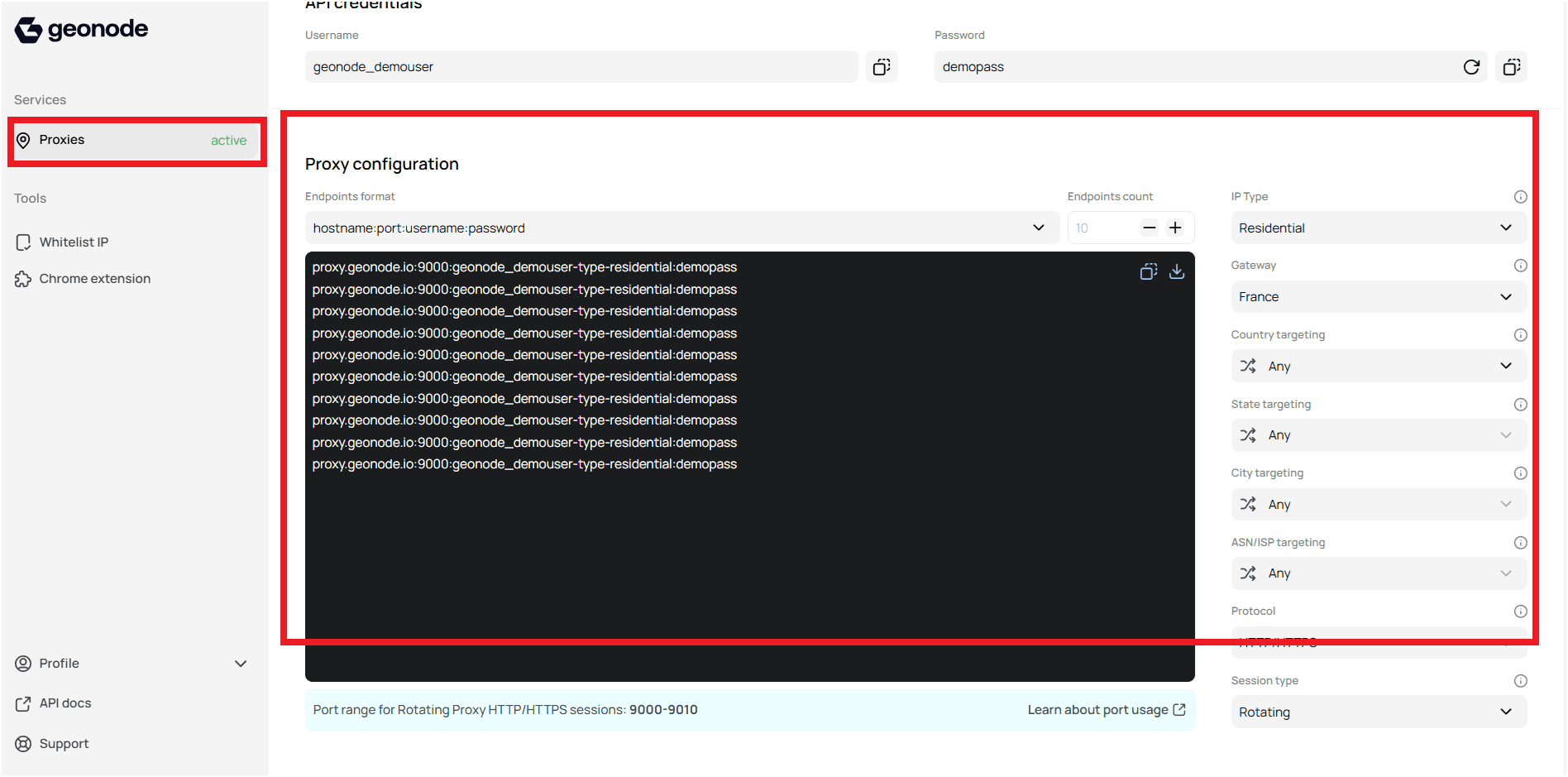
Step 2 — Choose the Endpoint Format
There are six formats available for generating endpoints, depending on your authentication and connection preferences.
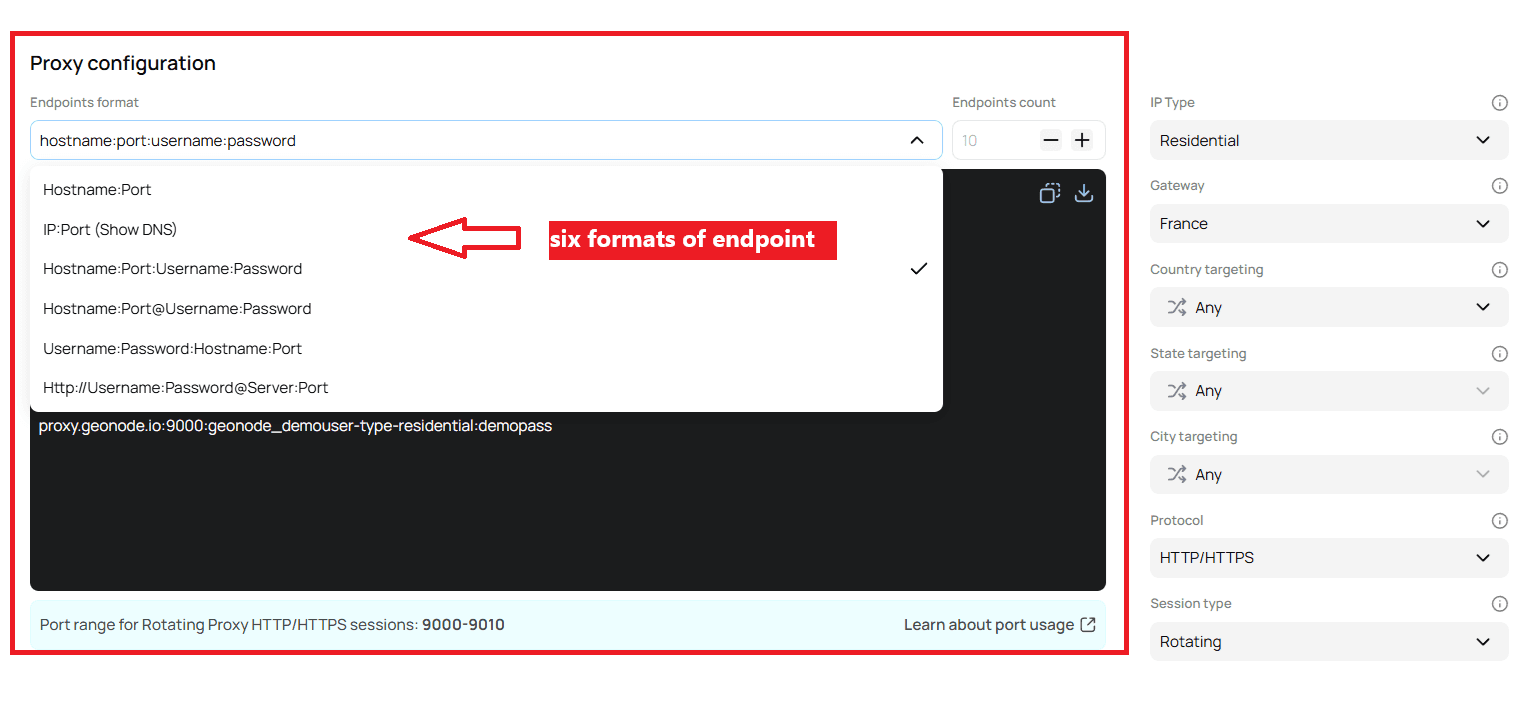
→ Understanding Different Proxy Endpoint Formats and Their Uses
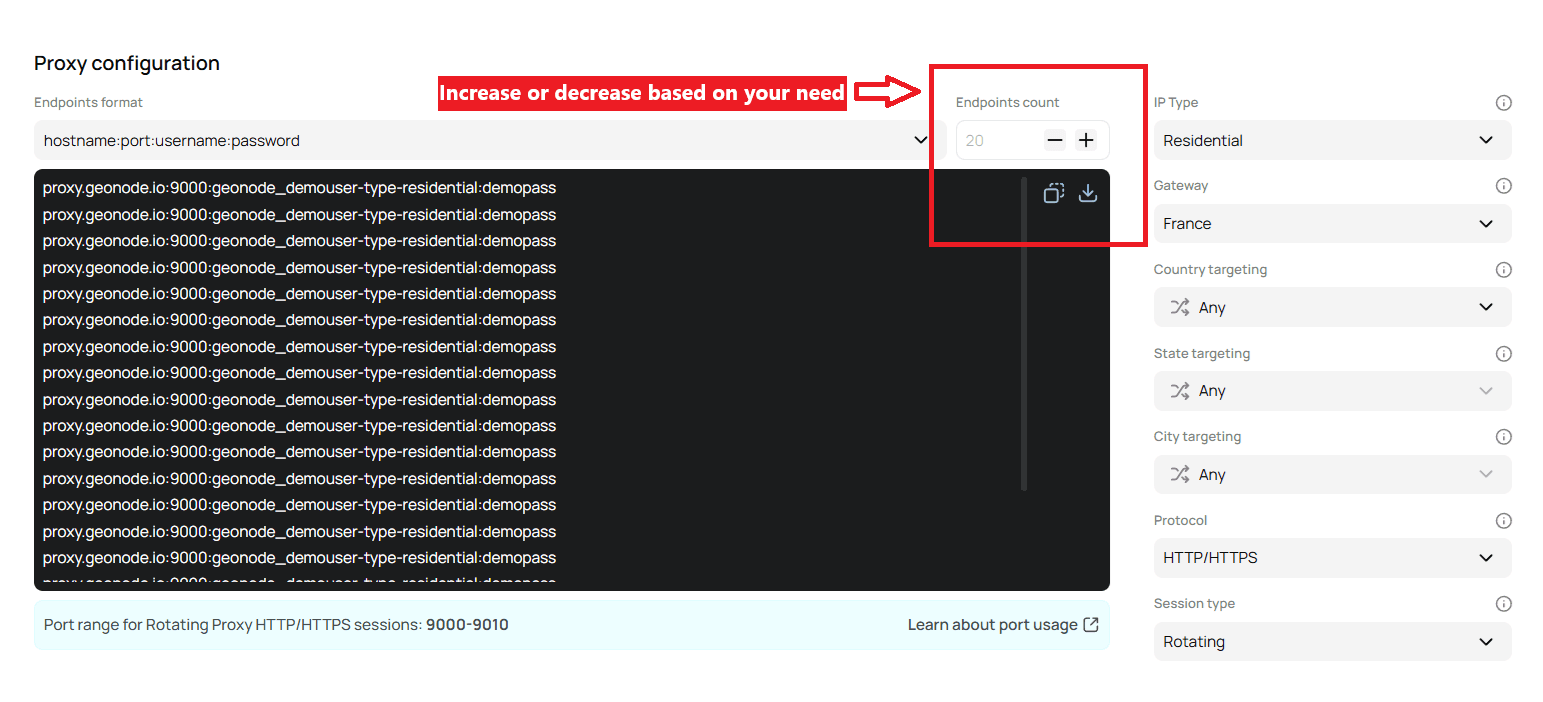
Step 3 — Set the Endpoint Count
Specify how many endpoints you want to generate.
Step 4 — Configure Proxy Parameters
There are seven options available for customizing proxy endpoints.
1. IP Type
Select the type of IPs you need.
Three types are available:
- Residential
- Datacenter
- Mixed
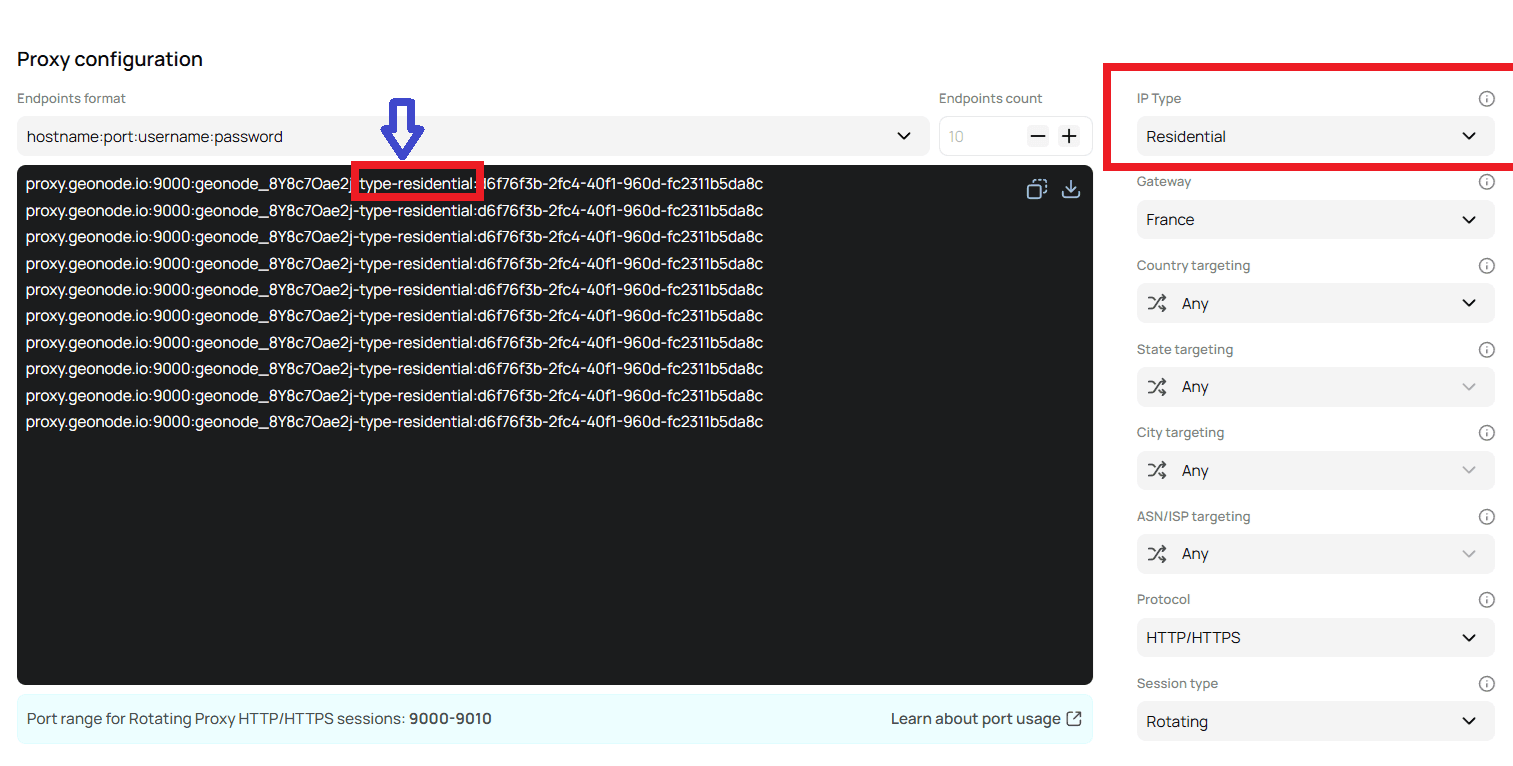
→ Learn about Residential, Datacenter, and Mixed IPs and their best use cases
2. Gateway (Host)
Choose the appropriate host for your location.
Three options are available:
| Location | Host Address |
|---|---|
| France | proxy.geonode.io |
| United States | us.premium-residential.geonode.com |
| Singapore | sg.premium-residential.geonode.com |
Selecting a host automatically updates the corresponding address.
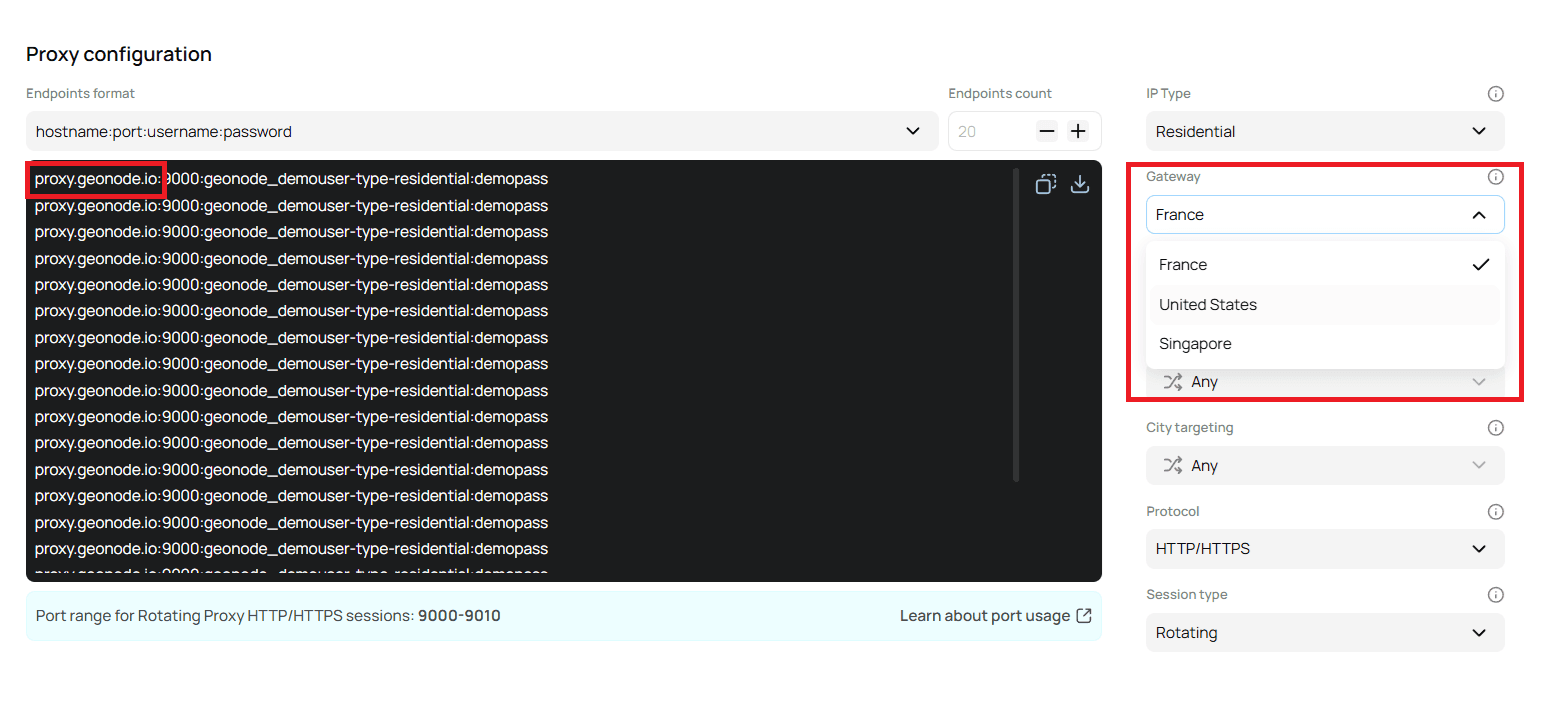
→ Learn about Geonode’s proxy gateways and how they work
3. Geo-Targeting (Country, State, City)
Select your desired country, state, or city.
By default, the system uses Any, meaning proxies can come from any location.
Example:
- Host: Singapore
- Target Country: China
This setup provides faster connectivity to nearby Chinese servers.
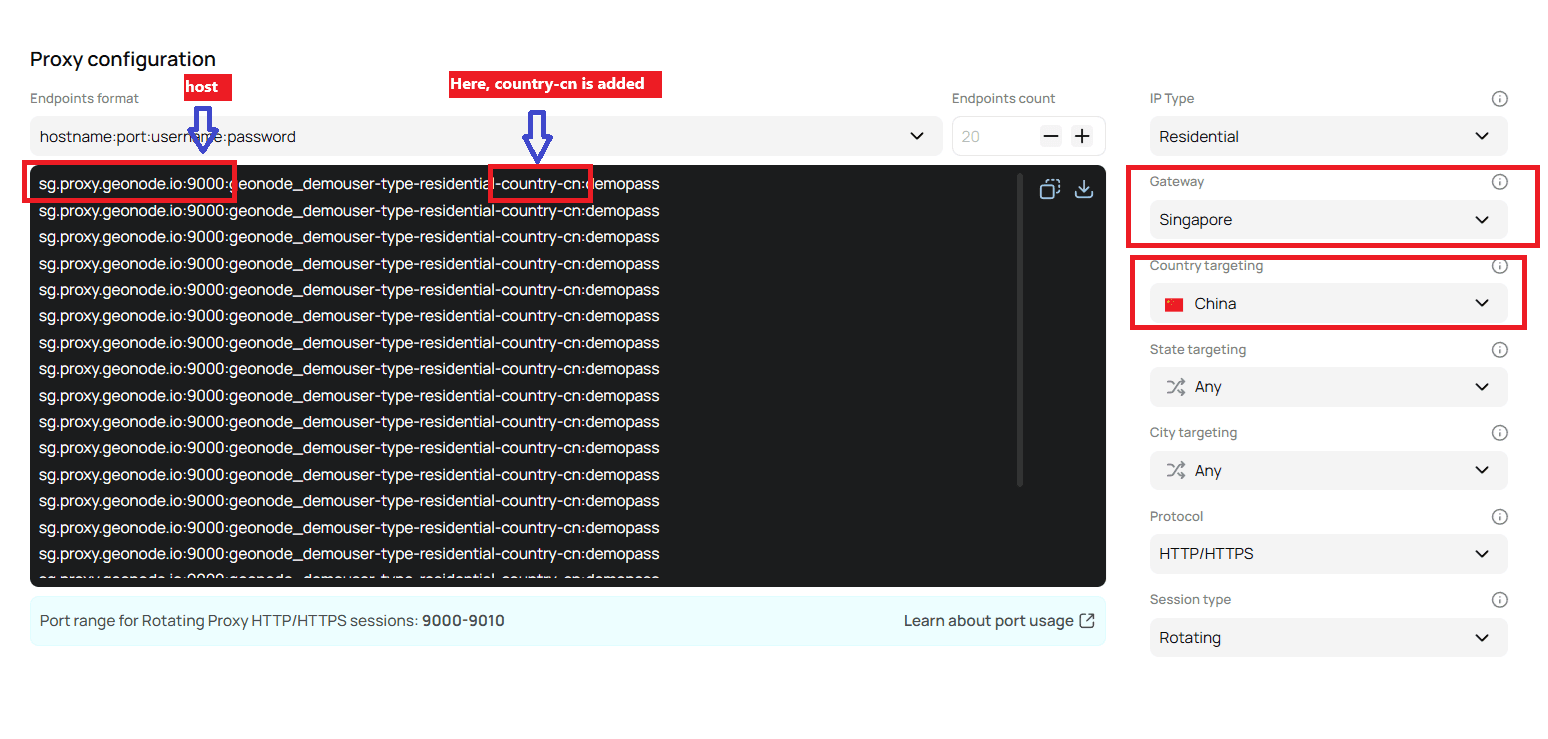
4. Protocol
Choose how your proxy handles connections:
- HTTP/HTTPS — standard web traffic.
- SOCKS5 — flexible and secure (if supported).
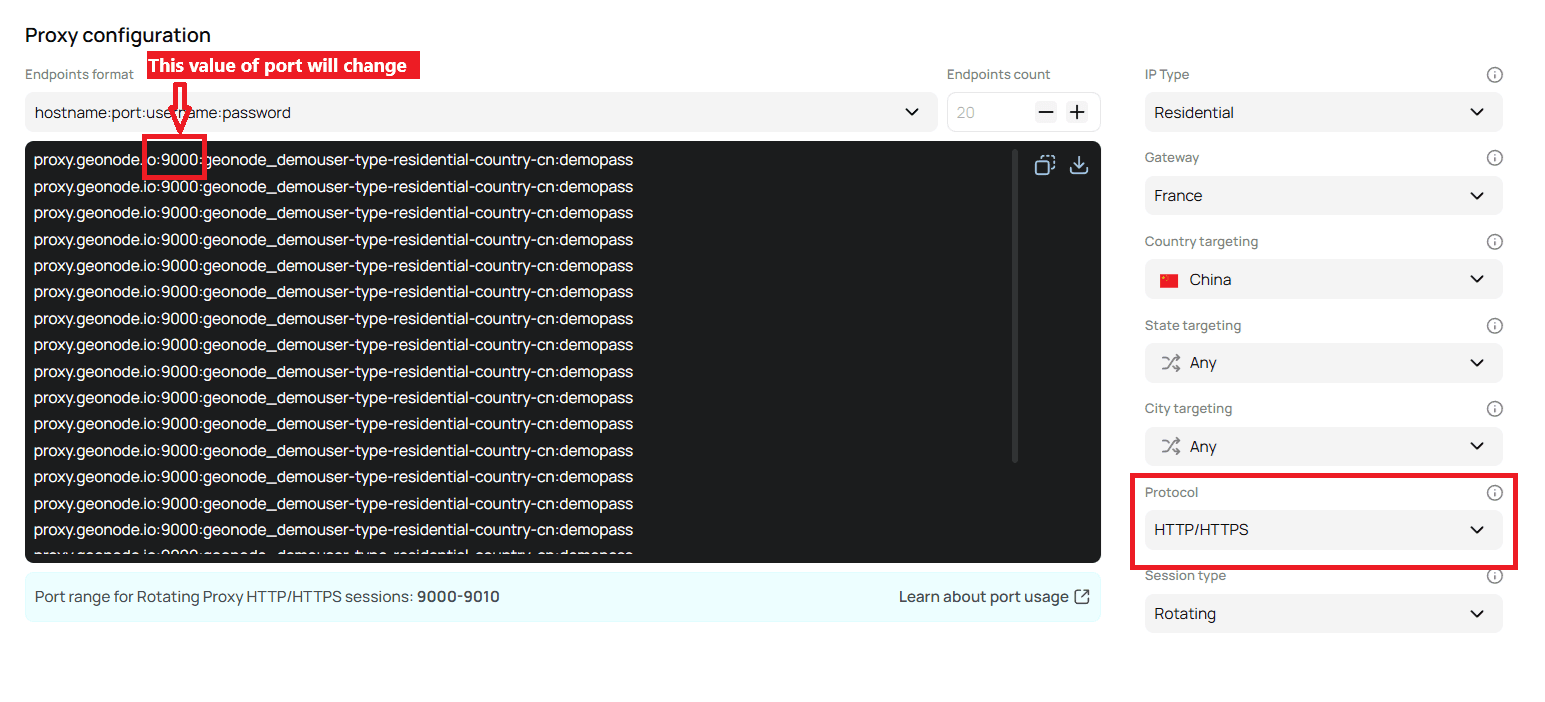
→ Understanding Protocol Type for Proxy Configuration
When you change the protocol, port numbers in generated endpoints update automatically.
→ Learn how ports work in Geonode’s proxy configuration
5. Session Type
Define how IPs are handled within a session:
- Rotating Session — IP changes periodically (best for scraping and automation).
- Sticky Session — IP stays the same for the entire session (best for logins or persistent tasks).
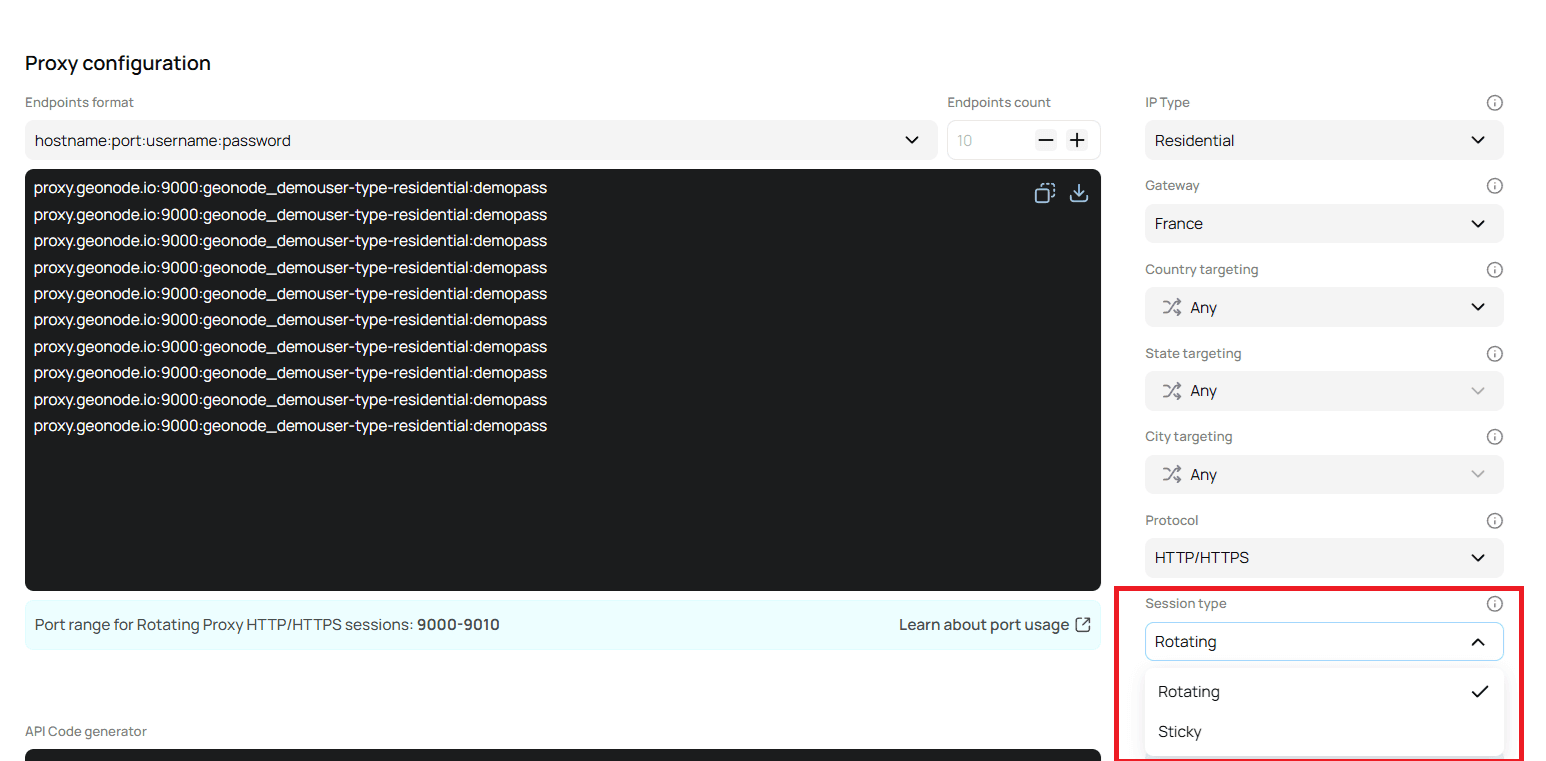
→ A Guide to Rotating and Sticky Sessions
6. Rotating Interval (Sticky Sessions Only)
If you use Sticky Sessions, you can set a rotation interval to control how often IPs refresh — in minutes or hours.
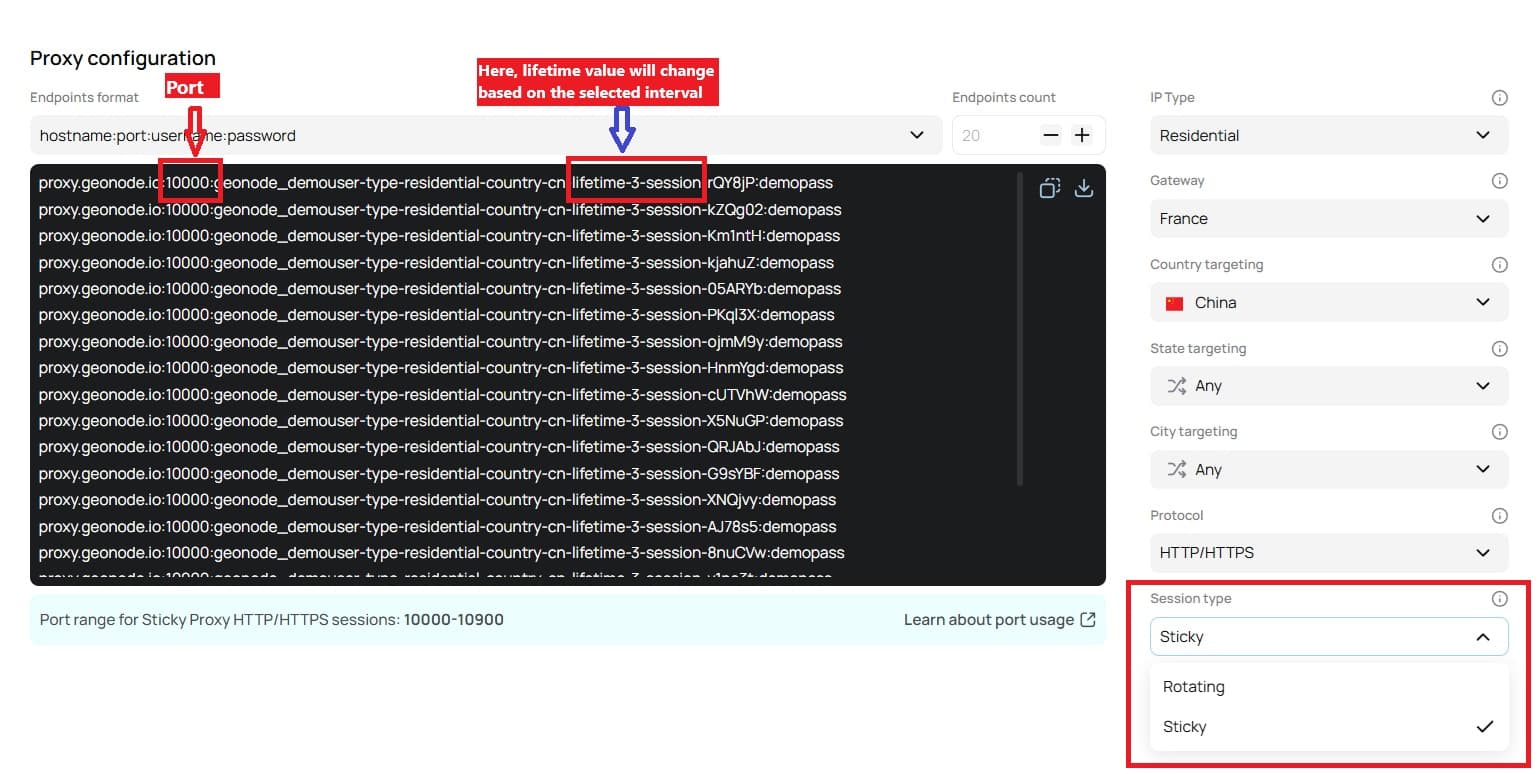
This keeps your connection stable while maintaining periodic IP rotation for security and reliability.
Step 5 — Select the Output Format
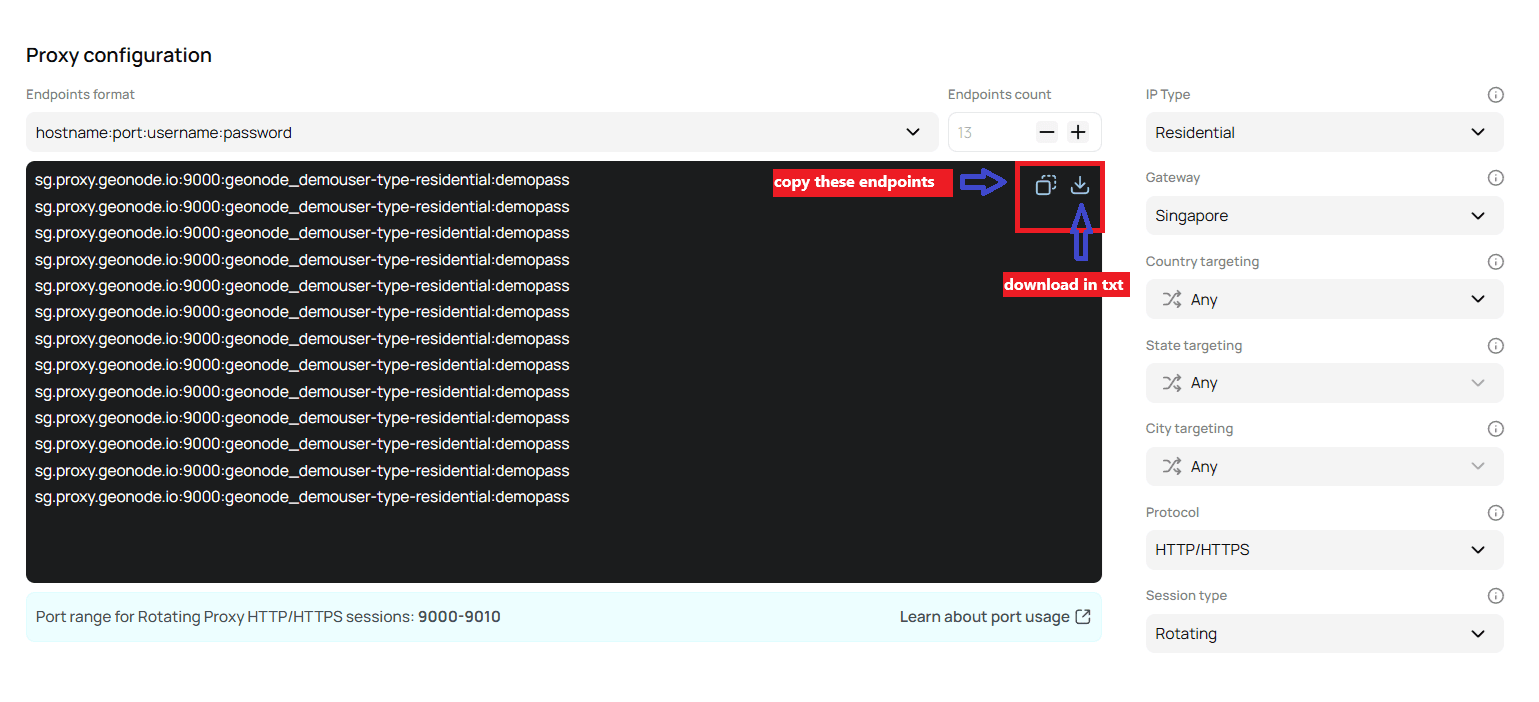
After completing the configuration, you can:
- Copy endpoints directly for immediate use, or
- Download them as a
.txtfile for later.
✅ You’re all set!
You’ve successfully created a ready-to-use list of proxy endpoints.
Your setup is now fully configured and ready to integrate into your applications.